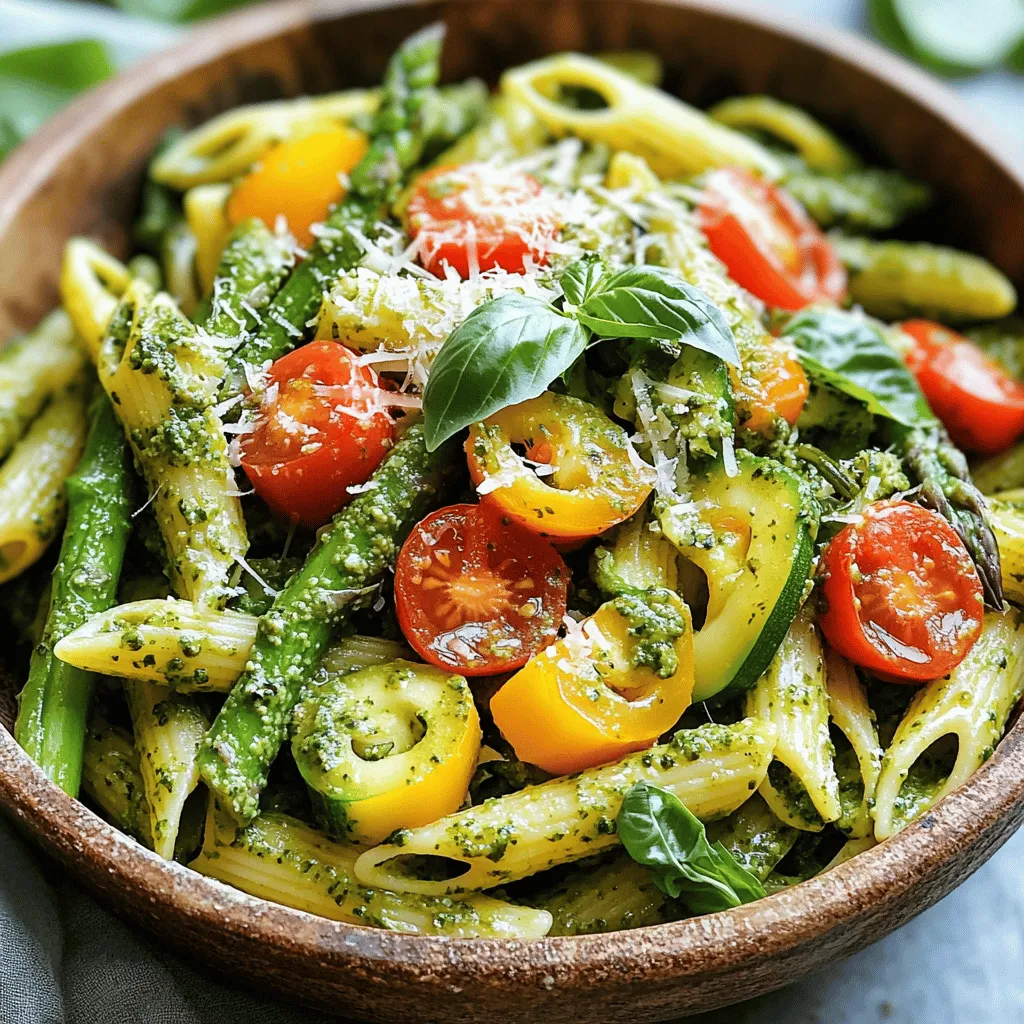
Looking for a fresh and flavorful dish that brightens your dinner table? Pesto Pasta Primavera is a delightful choice! With vibrant vegetables and aromatic pesto, this meal is both easy and satisfying. In this post, I’ll guide you through the essential ingredients and simple steps to create this colorful masterpiece. Get ready to impress your family and friends with your culinary skills! Let’s dive in!
Ingredients
When it comes to making Pesto Pasta Primavera, fresh ingredients shine. Here are the main components you need.
Main Ingredients
– Pasta Types: Use 12 oz of penne pasta. You can also try fusilli or spaghetti.
– Fresh Vegetables: Gather 1 cup of cherry tomatoes, 1 sliced zucchini, 1 sliced bell pepper (red or yellow), 1 cup of chopped asparagus, and 1 cup of fresh spinach.
– Sauce Ingredients: You will need 1/4 cup of pesto (homemade or store-bought), 3 tablespoons of olive oil, and 2 cloves of minced garlic.
– Seasonings and Garnishes: Keep salt, pepper, grated Parmesan cheese, and fresh basil on hand for added flavor.
These colorful and tasty ingredients make this dish special. Each element brings its own flavor, creating a delightful meal.
Step-by-Step Instructions
Cooking the Pasta
To start, bring a large pot of salted water to a boil. Add the penne pasta and cook it according to the package until it is al dente. This means it should be firm yet tender. Drain the pasta, but remember to save about 1/2 cup of the pasta water. This water helps to make the sauce creamy later.
Sautéing the Vegetables
In a large skillet, heat the olive oil over medium heat. Add minced garlic and let it cook for about 30 seconds. It should smell great but not brown. Next, add the cherry tomatoes, zucchini, bell pepper, and asparagus. Cook these for about 5 to 7 minutes. You want them tender but still a bit crisp. This keeps the veggies bright and fresh.
Combining Ingredients
Now, it’s time to mix everything. Add the cooked pasta to the skillet with the veggies. Pour in the pesto and the reserved pasta water. Stir everything well so the pasta gets coated smoothly. This step ensures every bite is packed with flavor. Taste your dish and add salt and pepper if needed.
Tips & Tricks
Perfecting the Pesto Pasta Primavera
To enhance flavors in your dish, use simple seasonings. I like to add salt, pepper, and a squeeze of lemon juice. This brightens the flavors. You can also try a pinch of red pepper flakes for some heat. When serving, the dish tastes best hot. Serve it right away to keep the pasta warm and the veggies crisp.
Cooking Equipment Essentials
A good pot is key for cooking pasta. Use a large pot to allow the pasta to move freely. A high-quality skillet is also important. It helps you sauté the veggies evenly and prevents sticking. A non-stick skillet can make cooking easier and cleanup quicker.
Presentation Tips
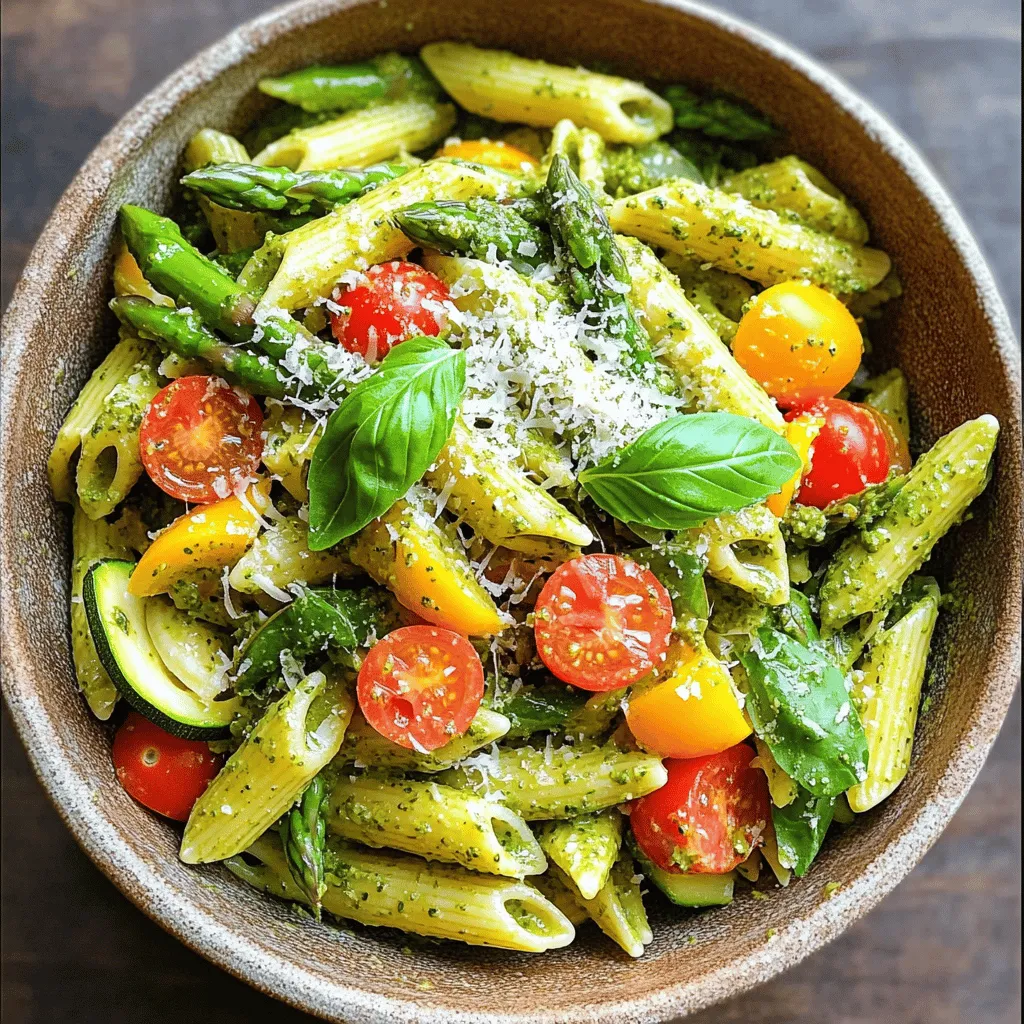
Plating makes a big difference. Use shallow bowls for a rustic look. Arrange the pasta in the center and let the veggies peek through. Drizzle some extra pesto over the top for color. Add a few halved cherry tomatoes and a sprinkle of Parmesan cheese for a nice touch. Fresh basil leaves make a beautiful garnish. This adds color and freshness to your dish.
Variations
Protein Additions
For a heartier meal, consider adding protein options. Chicken is a great choice. Simply grill or sauté chicken breast, then slice it and mix it into your pasta. Shrimp also works well. Cook shrimp in the same pan with your veggies for a quick addition. If you want a vegetarian option, try tofu. Cube firm tofu and sauté it until golden, then toss it with the pasta.
Gluten-Free Options
If you need gluten-free options, there are suitable pasta choices. Look for gluten-free penne or other shapes made from rice or chickpeas. Cooking times may vary, so check the package instructions. You might need to adjust the method slightly, but the result will still be delicious.
Seasonal Ingredient Swaps
Using seasonal ingredients can add fresh flavors. In spring, add peas or asparagus. In summer, try zucchini and bell peppers. For fall, consider butternut squash or roasted pumpkin. These swaps not only enhance taste but also reflect local produce. Each season brings its own unique flavors to this dish and makes it even more enjoyable.
Storage Info
Refrigerating Leftovers
To keep your pesto pasta primavera fresh, store it in the fridge right away. Use airtight containers to prevent moisture loss. Divide the pasta into portions for easy access. This helps you avoid reheating the entire batch each time. Glass containers work great for this. They help you see the food and avoid spills.
Freezing Instructions
If you want to save it for later, freezing is a good option. Let the pasta cool completely before packing it. Use freezer-safe bags or containers. Try to remove as much air as possible. This helps to prevent freezer burn. When you’re ready to eat, thaw it overnight in the fridge. Reheat it in a pan over low heat. Add a splash of water or olive oil to help it warm evenly.
Shelf Life
In the fridge, pesto pasta primavera lasts about 3-5 days. In the freezer, it can stay good for up to 3 months. Always check for signs of spoilage before eating. If you see any mold or unusual smells, it’s best to toss it out. Keeping an eye on your food helps you enjoy it at its best.
FAQs
How long does it take to make pesto pasta primavera?
Making pesto pasta primavera takes about 25 minutes in total. You’ll spend roughly 10 minutes prepping the veggies and cooking the pasta. The remaining 15 minutes cover sautéing the vegetables and mixing everything together. This quick dish fits perfectly into busy weeknight dinners.
Can I make pesto pasta primavera ahead of time?
Yes, you can make this dish ahead of time. Prepare it fully and store it in the fridge for up to three days. To reheat, simply warm it in a skillet over low heat. Add a splash of water or extra pesto to keep it moist. This method ensures you enjoy the fresh flavors without much fuss.
What can I serve with pesto pasta primavera?
Pairing pesto pasta primavera with a few tasty sides can enhance your meal. Consider serving it with:
– A light green salad with lemon vinaigrette
– Garlic bread for a crunchy side
– Roasted vegetables for extra flavor
These sides complement the pasta and create a complete dining experience.
Is pesto pasta primavera healthy?
Pesto pasta primavera offers many health benefits. It features fresh vegetables like zucchini and spinach, which are rich in vitamins. The whole dish is colorful, which often means it’s packed with nutrients. Using olive oil provides healthy fats, while whole grain pasta adds fiber. This dish is a great choice for a balanced meal.
Pesto pasta primavera is a simple and delightful dish. You learned about key ingredients, like fresh veggies, pasta types, and vibrant pesto. I shared steps for cooking pasta and sautéing vegetables to achieve perfect flavor. You discovered creative ways to store leftovers and enhance your meal with various proteins and seasonal swaps.
Enjoy this dish that is both fresh and hearty. Experiment with ingredients to make it your own. Now, go ahead and create your own tasty version of pesto pasta primavera!