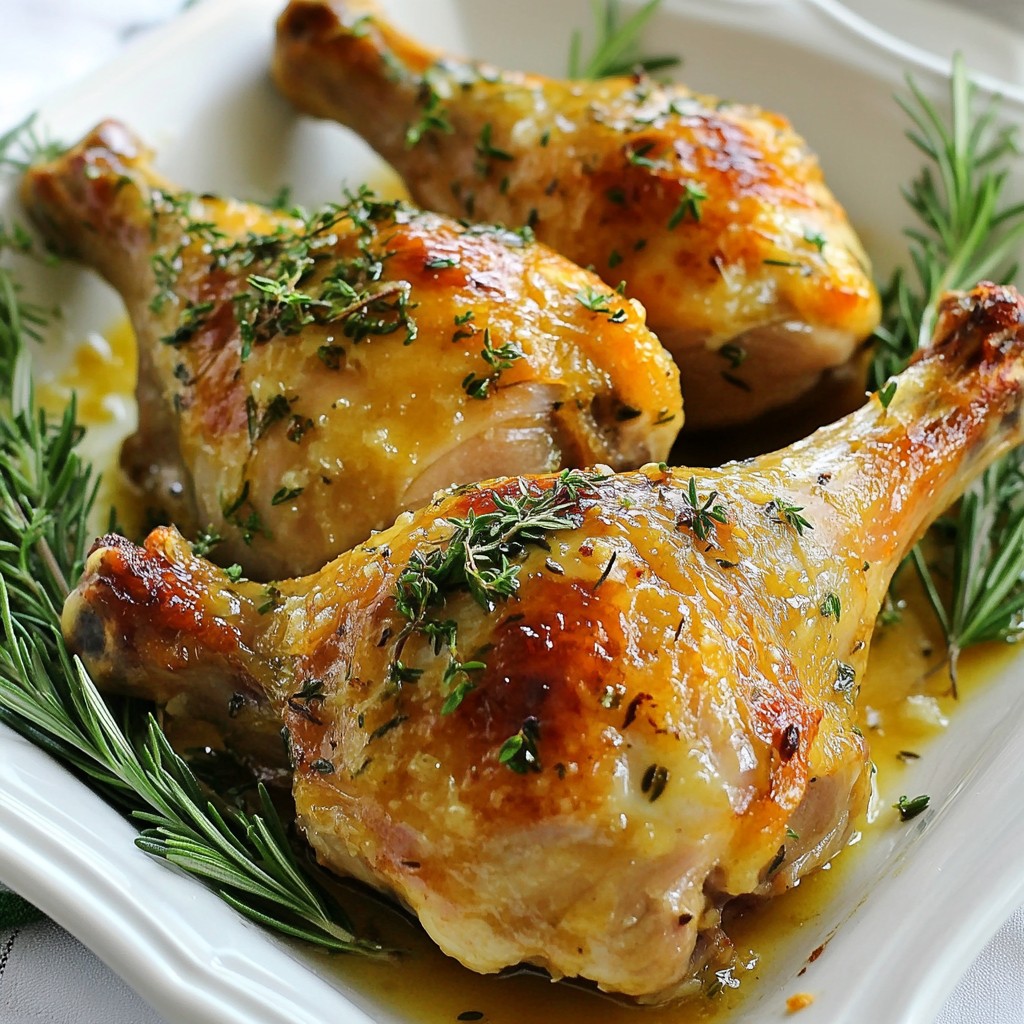
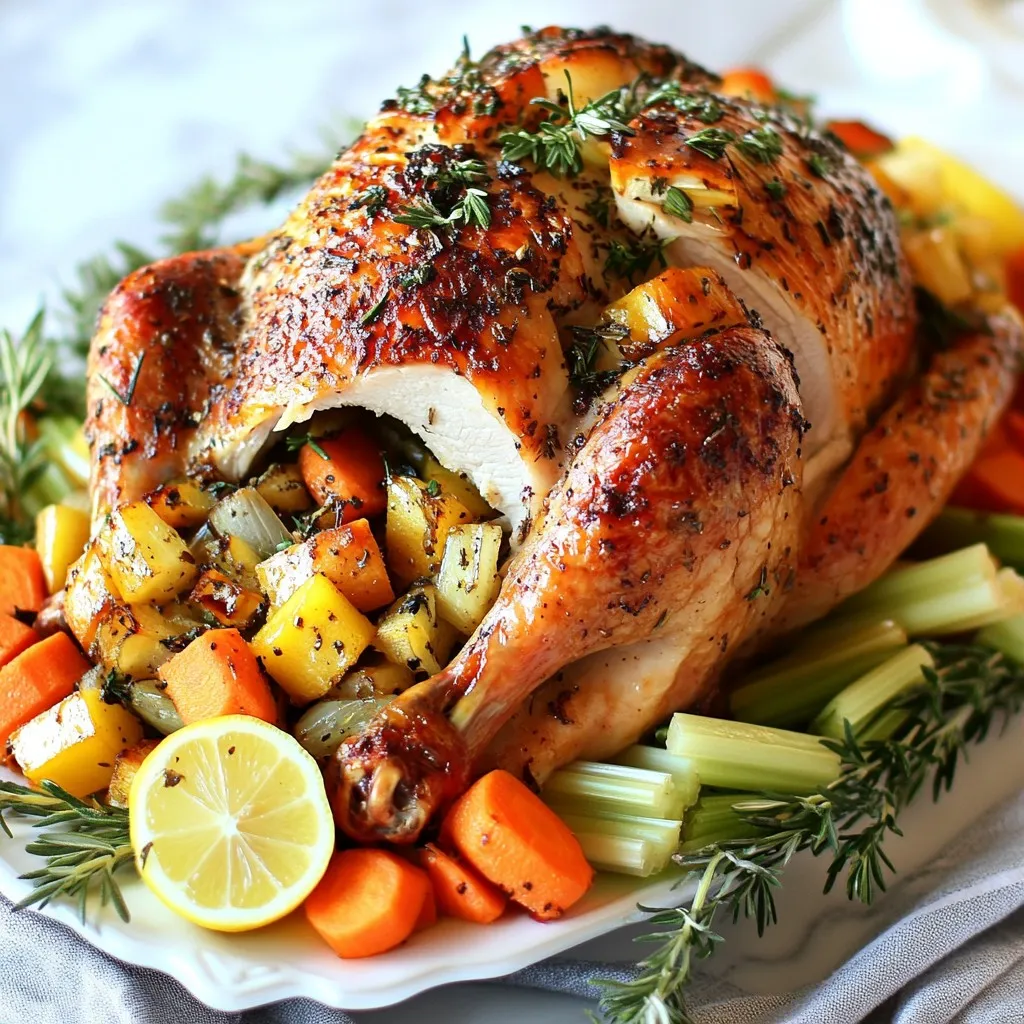
Get ready to impress your guests with a Garlic Butter Herb Roasted Turkey that is bursting with flavor! In this blog, I’ll share my favorite recipe that ensures a juicy, golden-brown turkey every time. You’ll learn about the best herbs, aromatics, and tips to make your turkey the star of the feast. Let’s dive in and create a meal that everyone will remember!
Why I Love This Recipe
- Flavorful Herb Butter: The combination of garlic and fresh herbs creates a rich and aromatic butter that infuses the turkey with incredible flavor.
- Moist and Juicy: Using a low-sodium broth during roasting ensures that the turkey remains moist and succulent throughout the cooking process.
- Impressive Presentation: This roasted turkey looks stunning on the dinner table, making it a centerpiece for any festive gathering.
- Crowd-Pleasing Dish: With generous servings and a classic flavor profile, this turkey recipe is sure to satisfy family and friends during holiday celebrations.
Ingredients
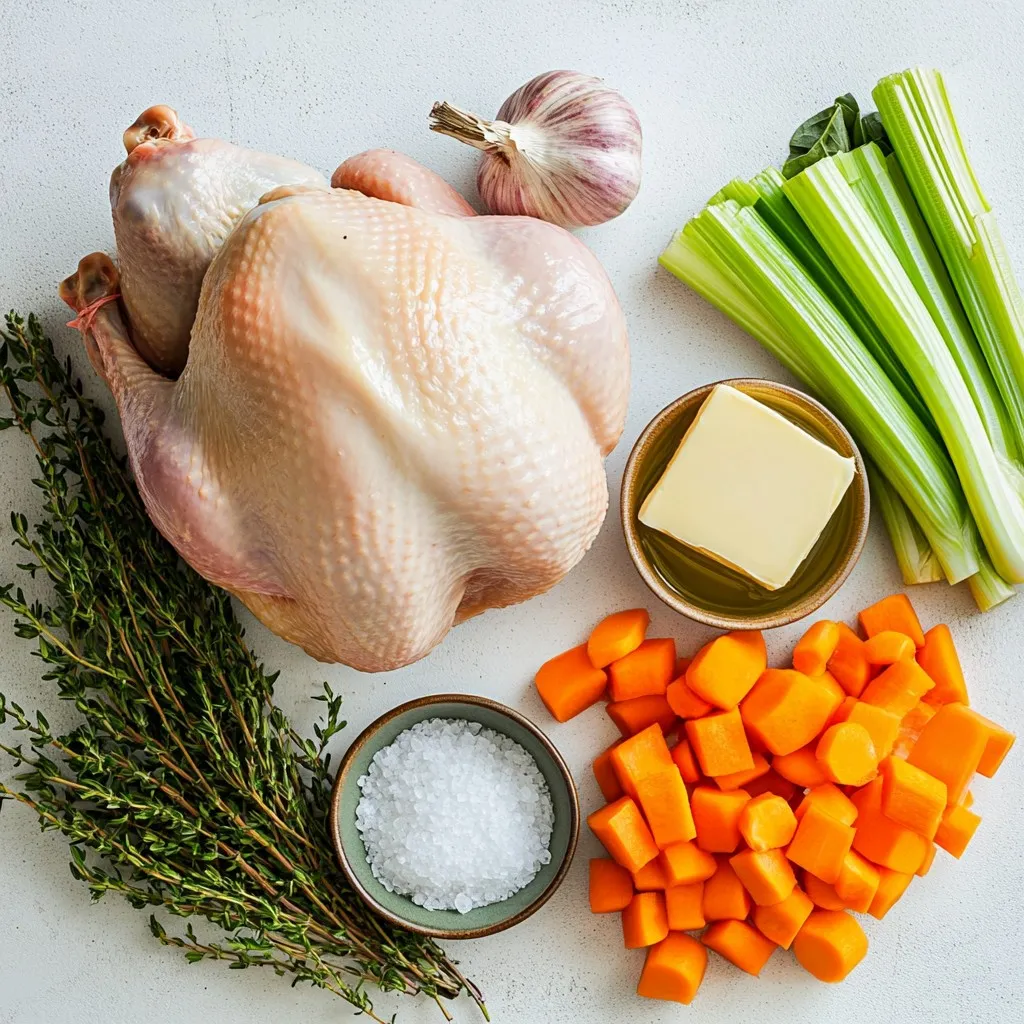
When making Garlic Butter Herb Roasted Turkey, you need a few key ingredients. These will help create a tasty feast that everyone will enjoy. Here is the list:
– Whole turkey specifications
– 1 whole turkey (12-14 pounds), thawed
– Herb butter ingredients
– 1 cup unsalted butter, softened
– 1 head of garlic, cloves peeled and minced
– 1 tablespoon fresh thyme, chopped
– 1 tablespoon fresh rosemary, chopped
– 1 tablespoon fresh sage, chopped
– 2 teaspoons salt
– 1 teaspoon black pepper
– Aromatics for stuffing
– 1 large onion, quartered
– 2 carrots, cut into large chunks
– 2 celery stalks, cut into large chunks
These ingredients are key to making your turkey flavorful. The fresh herbs will bring out the best taste. The garlic butter will keep the meat juicy and rich. Don’t skip the aromatics; they add great flavor as the turkey roasts.
Step-by-Step Instructions
Preheat the Oven
First, set your oven to 325°F (165°C). This warm heat helps cook the turkey evenly.
Prepare the Herb Butter
Next, grab a medium bowl. Mix one cup of softened butter with minced garlic, fresh thyme, rosemary, sage, salt, and black pepper. Make sure it is all well combined. This herb butter gives the turkey amazing flavor.
Prepare and Stuff the Turkey
Take the turkey out of its packaging and pat it dry with paper towels. Carefully lift the skin on the breast and thighs. This step is key! With your fingers, gently massage the garlic herb butter under the skin. Spread it evenly across the meat. Then, rub any leftover butter on the outside of the turkey.
Now, it is time to stuff the turkey. Place quartered onion, carrot chunks, and celery into the turkey’s cavity. These aromatics add extra flavor while roasting.
Roast the Turkey
In a large roasting pan, pour in two cups of low-sodium chicken broth. This will keep the turkey moist. Next, place the turkey breast-side up on a rack in the pan. Roast it in the oven for about 13-15 minutes per pound. Don’t forget to baste the turkey every 30-40 minutes with the pan juices. This helps keep the skin crispy and golden.
To check if the turkey is done, insert a meat thermometer into the thickest part of the thigh. It should read 165°F (75°C). Once it’s cooked, take the turkey out of the oven. Let it rest for 20-30 minutes before carving. This resting time helps the juices redistribute for a juicy turkey.
Tips & Tricks
How to Keep Turkey Moist
To keep your turkey moist, you should use garlic herb butter. This butter adds flavor and moisture. Make sure to rub it under the skin. This helps keep the meat juicy. Basting the turkey with its own juices also helps. Baste every 30-40 minutes for best results. You can also add broth to the pan. This creates steam while it roasts.
Best Basting Techniques
Basting is key to a great turkey. Use a large spoon or baster for this task. Start basting when the turkey is halfway done cooking. Pour the juices from the pan over the skin. This adds flavor and helps with browning. If you want even more flavor, add wine to the pan. Keep an eye on the turkey to avoid drying it out.
Resting Time Importance
Resting your turkey is very important. After cooking, let it rest for 20-30 minutes. This step allows the juices to spread throughout the meat. If you carve too soon, the juices spill out. This makes your turkey dry. Cover it loosely with foil while resting. This keeps it warm and ready to serve. Enjoy your flavorful feast!
Pro Tips
- Brining for Flavor: Consider brining your turkey overnight in a saltwater solution to enhance its juiciness and flavor.
- Use a Meat Thermometer: Always use a meat thermometer to ensure your turkey is cooked to the perfect temperature of 165°F (75°C) for food safety.
- Let it Rest: Allowing the turkey to rest for 20-30 minutes after roasting helps retain its juices, resulting in a more flavorful and moist meat.
- Basting for Moisture: Basting the turkey with pan juices every 30-40 minutes adds moisture and enhances the flavor of the skin.
Variations
Herb Substitutions
You can change the herbs in the garlic butter mix. If you love parsley, use it instead of sage. You can swap in dill for a fresh twist. For a bolder taste, try tarragon. Use whatever herbs you have on hand. This makes the dish more personal to your taste.
Stuffing Options
The stuffing inside the turkey can be fun to mix up. Instead of onion, you might add leeks for a sweet flavor. You can also use apples for a hint of sweetness. For a heartier stuffing, add dried fruits or nuts. Each choice adds a new layer of taste to your turkey.
Flavor Enhancements with Citrus
Citrus can brighten your turkey’s taste. Try adding lemon or orange zest to the garlic butter. You can also place citrus slices inside the turkey. This adds moisture and a refreshing flavor. The result is a turkey that is juicy and packed with flavor.
Storage Info
Leftover Storage Tips
After your feast, store leftover turkey in airtight containers. Keep the meat in the fridge. Use it within three days for best taste. If you have broth, store it in a separate container. This keeps flavors fresh. Label your containers with dates so you know when to use them.
Reheating Instructions
To reheat, preheat your oven to 325°F (165°C). Place the turkey in an oven-safe dish. Add a splash of chicken broth to keep it moist. Cover the dish with foil to prevent drying. Heat for about 20-30 minutes or until the meat reaches 165°F (75°C). Avoid the microwave, as it can make the turkey tough.
Freezing Guidelines
If you have extra turkey, freezing is a great option. Slice the meat into portions before freezing. Wrap each piece tightly in plastic wrap, then place in a freezer bag. Remove as much air as possible. Store for up to six months. When ready to use, thaw in the fridge overnight before reheating.
FAQs
How long does it take to cook a turkey?
Cooking a turkey takes about 13-15 minutes per pound. For a 12-14 pound turkey, this means roughly 2.5 to 3.5 hours. Always check the turkey’s weight to know the time. Basting it every 30-40 minutes will help keep it moist.
What temperature should the turkey be cooked to?
The turkey should reach an internal temperature of 165°F (75°C). Insert a meat thermometer in the thickest part of the thigh. This ensures the turkey is safe and juicy.
Can I use a frozen turkey for this recipe?
Yes, you can use a frozen turkey. Just be sure to thaw it completely before cooking. Thawing in the fridge is best and can take 24 hours for every 4 to 5 pounds. This way, the turkey cooks evenly and stays safe to eat.
In this blog post, we covered how to make a delicious turkey. We discussed important ingredients like the turkey, herb butter, and aromatics. You learned the steps to prepare, stuff, and roast the turkey perfectly. I shared tips to keep your turkey moist and options for stuffing. Finally, we looked at storage tips for leftovers and answered key questions.
Remember, a well-cooked turkey brings everyone together. Happy cookin